

Oct 22, 2026
Kasturi Turmeric vs. Regular Turmeric: What's the Difference for Skincare?
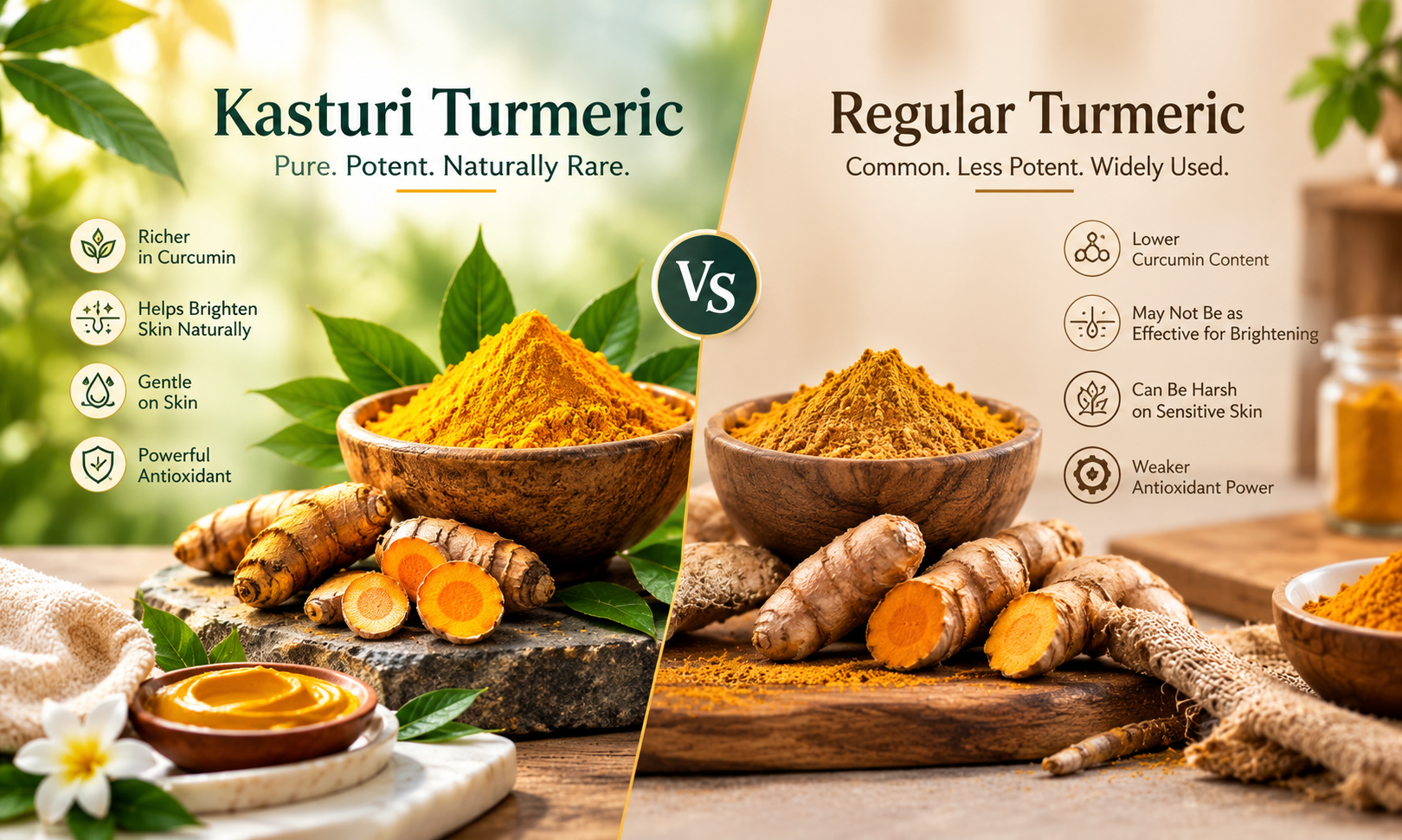
If you've ever seen a small, pale, fragrant piece of root in an Indian beauty shop and wondered how it differs from the bright yellow turmeric sitting in your kitchen, you're not alone. Both are called turmeric. Both have a long history in Indian beauty rituals. But they are not the same plant, and they don't behave the same way on your skin.
In this guide, we'll explain what Kasturi turmeric is, how it differs from regular turmeric, how each is traditionally used for skincare, and how to decide which one belongs in your routine.
What Is Regular Turmeric?
Regular turmeric, known botanically as Curcuma longa, is the golden-yellow spice you use in dal, curries, and milk. It's the turmeric most people know. Its deep orange-yellow colour comes from curcumin, a compound that has been widely studied.
In Indian homes, it's also a familiar beauty ingredient. Brides apply haldi before weddings, grandmothers mix it into face packs with gram flour and milk, and many families use a pinch on small blemishes or scrapes. It's strongly pigmented, which is both its charm and its challenge.
What Is Kasturi Turmeric?
Kasturi turmeric is a different species, Curcuma aromatica, often called wild turmeric or jungli haldi. In Tamil it's known as kasturi manjal, and in Hindi as kasturi haldi. The word "kasturi" refers to musk, which hints at its distinctive scent.
The rhizome looks similar to regular turmeric on the outside, but it has a few clear differences: it's paler inside, has a sweet, camphor-like fragrance, and doesn't stain as aggressively. This is why it has long been prized as a beauty turmeric rather than a cooking one. It's traditionally grown and used in parts of South and East India, and it features in old Ayurvedic and folk beauty practices.
Kasturi Turmeric vs. Regular Turmeric: The Key Differences
1. Botanical Identity
Regular turmeric is Curcuma longa. Kasturi turmeric is Curcuma aromatica. They belong to the same family, which is why people often confuse them, but they are two separate plants with different chemical profiles.
2. Aroma
This is the first thing you notice. Regular turmeric has an earthy, slightly bitter smell that most people link with cooking. Kasturi turmeric has a lighter, sweeter, more perfumed aroma. That's one reason it appears in traditional bathing powders and handmade soaps.
3. Colour and Staining
Regular turmeric is a strong dye. Anyone who has applied a haldi face pack knows the faint yellow tinge it can leave on skin, towels, and basins. Kasturi turmeric is much gentler in this respect. Its colour is paler, and it's less likely to leave a visible yellow cast when used in small amounts.
4. Curcumin Content
Regular turmeric generally contains more curcumin, the compound behind that deep colour. Kasturi turmeric contains less curcumin but has its own mix of aromatic oils and plant compounds. Because the chemistry differs, you shouldn't assume one is simply a stronger or weaker version of the other.
5. Culinary Use
Regular turmeric is a kitchen staple. Kasturi turmeric is not meant for eating in the same way. It has a bitter, camphor-like taste, and it's usually reserved for external beauty and traditional preparations. If a recipe or label doesn't say it's food-grade, don't cook with it.
6. Traditional Skincare Role
Regular turmeric is a classic in brightening and cleansing pastes. Kasturi turmeric is traditionally used in ubtans, face packs, and bathing powders, often for a smoother, more even-looking complexion and a pleasant scent. In many households, it has also been used as part of grooming routines for generations.
How Each Turmeric Is Traditionally Used for Skin
It helps to separate tradition from guaranteed results. Both turmerics have been part of beauty rituals for generations, and many people feel they make skin look fresher and more radiant. But individual results vary, and skincare products are not medical treatments.
Regular turmeric is often used in:
- Haldi pastes for pre-wedding rituals
- Face packs mixed with gram flour, yogurt, or milk
- Simple home remedies for dull-looking skin
- Cleansing and purifying pastes
Kasturi turmeric is often used in:
- Ubtan blends for a soft, even-looking finish
- Gentle face packs and body scrubs
- Bathing powders and handmade soaps
- Traditional bridal beauty routines
Since Kasturi turmeric is milder in colour and fragrance-friendly, it fits naturally into products you use daily, such as soap. You get the traditional ingredient without wearing a yellow tint afterwards.
Which One Is Better for Your Skin?
Neither is "better" across the board. It depends on what you want and how your skin behaves.
Regular turmeric may suit you if:
- You enjoy DIY face packs and don't mind the colour
- You're making a quick, occasional treatment
- You like the classic haldi ritual
Kasturi turmeric may suit you if:
- You prefer a lighter, more fragrant ingredient
- You want something suitable for regular use in products like soap or bathing powders
- You dislike staining on skin, towels, or clothes
- You want a traditional beauty ingredient that feels more like a daily ritual
If your skin is sensitive, the most important step isn't choosing between the two. It's doing a patch test first.
Why Kasturi Turmeric Works Well in Handmade Soap
Soap is one of the easiest ways to bring a traditional ingredient into your daily routine. You don't need to mix pastes, measure powders, or wash off stains. You simply lather and rinse.
Kasturi turmeric suits this format for a few reasons:
- Its gentle colour doesn't overpower the soap or stain your skin
- Its natural fragrance blends well with a handmade soap's own character
- It fits the idea of an everyday ritual, not an occasional treatment
Handmade soaps also tend to keep more of the character of their natural ingredients compared with heavily processed bars, though quality still depends on the formulation.
If you're curious about trying it, the Himaz Kasturi Turmeric Handmade Soap (75gm) is an Ayurvedic soap built around this traditional beauty ingredient. Check the product page for the full ingredient list and usage details.
How to Use Kasturi Turmeric Soap
A good routine is simple. Here's an easy way to start:
- Wet your skin with lukewarm water.
- Lather the soap in your hands first, rather than rubbing the bar directly on your face.
- Massage gently for 20 to 30 seconds. Skip the rough scrubbing.
- Rinse thoroughly with clean water.
- Pat dry with a soft towel.
- Moisturise afterwards, especially if your skin tends to feel dry.
Use it once or twice a day, depending on how your skin responds. If you notice tightness, redness, or irritation, cut back.
Tips for Using Turmeric on Your Skin Safely
- Patch test first. Try a small amount on your inner arm and wait 24 hours before using it on your face.
- Avoid the eye area. Rinse immediately if soap or paste gets into your eyes.
- Don't overdo it. More isn't better. Overuse can leave skin feeling dry.
- Use sunscreen. Whatever your cleansing routine, sun protection matters every morning.
- Be careful with raw powders. Pure Kasturi turmeric powder can irritate if applied undiluted. Mix it with a gentle base like yogurt, milk, or rose water.
- Stop if irritation appears. Persistent redness, itching, or rashes mean it's time to stop and speak to a dermatologist.
- Know your skin conditions. If you have eczema, a skin condition, or a known allergy, check with a doctor first.
Common Myths About Kasturi Turmeric
"It's just regular turmeric with a fancy name." Not true. It's a different species with a different aroma, colour, and chemistry.
"It works overnight." Traditional ingredients are gentle and best used consistently over time. Be wary of anyone promising instant results.
"Natural means safe for everyone." Natural ingredients can still cause reactions. Patch testing matters regardless of the label.
"You can eat it like normal turmeric." Kasturi turmeric is generally an external beauty ingredient and isn't a substitute for cooking turmeric.
How to Choose a Genuine Kasturi Turmeric Product
Since the name is popular, quality varies. When shopping, look for:
- A clear ingredient list that names the ingredient, not just "turmeric extract"
- A natural, gentle aroma rather than a heavy artificial fragrance
- Transparent sourcing and manufacturing from a brand that explains how the product is made
- Honest claims. Good brands don't promise to cure skin problems
- Reasonable prices. Very cheap products may use mostly fillers, while very expensive ones aren't automatically better
You can also explore our other herbal skincare options, such as our Multani Mitti face pack guide, for more ways to bring traditional ingredients into your routine.
Frequently Asked Questions
What is the difference between Kasturi turmeric and regular turmeric?
Kasturi turmeric (Curcuma aromatica) is a different species from regular turmeric (Curcuma longa). It has a lighter, more fragrant aroma, a paler colour, and stains less. Regular turmeric is the strongly coloured spice used in cooking.
Is Kasturi turmeric the same as wild turmeric?
Yes. Kasturi turmeric is commonly called wild turmeric or jungli haldi, and it's known as kasturi manjal in Tamil.
Can I use Kasturi turmeric on my face?
It's traditionally used on the face in face packs and ubtans, usually mixed with a gentle base. Do a patch test first, and avoid using undiluted raw powder on sensitive skin.
Does Kasturi turmeric stain the skin?
It's much less likely to leave a yellow tint compared with regular turmeric, especially in small amounts or in products like soap. Some colouring can still happen with strong pastes.
Is Kasturi turmeric soap good for daily use?
Many people use handmade herbal soaps daily as part of their routine. If your skin feels dry or irritated, reduce how often you use it and moisturise afterwards.
Can I eat Kasturi turmeric?
It's mainly used externally for beauty. Don't use it in cooking unless the product is specifically labelled as safe for eating.
Is Kasturi turmeric better than regular turmeric for glowing skin?
Neither is guaranteed to give a particular result. Both are traditional ingredients, and the better choice depends on your skin, your routine, and whether you prefer a fragrant, low-stain option like Kasturi turmeric.
How should I do a patch test?
Apply a small amount of the product on your inner forearm, leave it for 24 hours, and watch for redness, itching, or swelling. If nothing happens, you can try it on your face.
Is Kasturi turmeric safe for sensitive skin?
It can suit some people with sensitive skin, but reactions vary. Patch test first, use gentle formulations, and talk to a dermatologist if you have a skin condition or a history of allergies.
Final Thoughts
Kasturi turmeric and regular turmeric share a name and a long beauty heritage, but they're two distinct ingredients. Regular turmeric is the bold, golden staple of Indian kitchens and haldi rituals. Kasturi turmeric is its fragrant, softer-coloured cousin, traditionally kept for beauty.
If you like the idea of a daily ritual with a traditional ingredient and without the yellow stains, Kasturi turmeric in a handmade soap is a simple place to start. Whichever you choose, go slowly, patch test, and let your skin tell you what it likes.
This article is for general information only and isn't medical advice. Cosmetic products are not intended to treat or cure skin conditions. If you have a skin concern, consult a qualified dermatologist.